March 3rd, 2021 § Comments Off on Report: US wasted billions on cars, buildings in Afghanistan § permalink
By Kathy Gannon – Associated Press
In this Feb. 1, 2021 file photo, birds flyover the city of Kabul, Afghanistan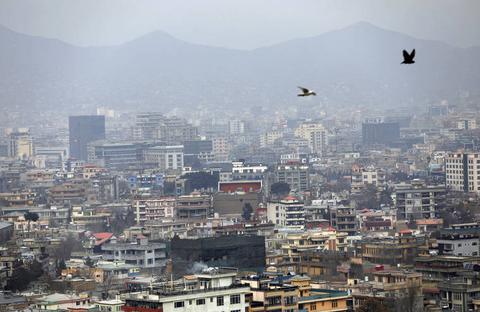
The United States wasted billions of dollars in war-torn Afghanistan on buildings and vehicles that were either abandoned or destroyed, according to a report released Monday by a U.S. government watchdog.
The agency said it reviewed $7.8 billion spent since 2008 on buildings and vehicles. Only $343.2 million worth of buildings and vehicles “were maintained in good condition,” said the Special Inspector General for Afghanistan Reconstruction, or SIGAR, which oversees American taxpayer money spent on the protracted conflict.
The report said that just $1.2 billion of the $7.8 billion went to pay for buildings and vehicles that were used as intended.
“The fact that so many capital assets wound up not used, deteriorated or abandoned should have been a major cause of concern for the agencies financing these projects,” John F. Sopko, the special inspector general, said in his report.
The U.S. public is weary of the nearly 20-year-old war and President Joe Biden is reviewing a peace deal his predecessor, Donald Trump, signed with the Taliban a year ago. He must decide whether to withdraw all troops by May 1, as promised in the deal, or stay and possibly prolong the war. Officials say no decision has been made but on Monday, Washington’s peace envoy and the American who brokered the U.S.-Taliban deal, Zalmay Khalilzad, was back in the Afghan capital for a tour of the region. » Read the rest of this entry «
February 28th, 2021 § Comments Off on Cities Voted For Green Building Codes, Now Developers Want To End Voting § permalink
by Alexander C. Kaufman
Powerful lobbying groups are fighting to block cities from having a final say over building codes that could cut pollution and make energy bills cheaper A 280-unit apartment building under construction in Minneapolis in 2017. Nearly three-quarters of Minneapolis’ emissions came from buildings
Kim Havey had a problem. Minneapolis was generating more and more of its electricity from renewables, dropping climate-warming pollution from power to record lows. But emissions from natural gas, which is used to heat buildings and stovetops, were climbing ― overtaking power plants as the city’s top source of carbon pollution in 2017.
Nearly three-quarters of Minneapolis’ emissions came from buildings, and the city was undergoing a construction boom to accommodate a population growing faster than at any point since the 1950s. So Havey, the city’s sustainability director, helped craft new rules mandating more efficient standards for all those new buildings.
But there was a hurdle. Buildings over 50,000 square feet ― medical offices, corporate headquarters, apartment buildings ― fell under state jurisdiction. And Minnesota, like most states, used the International Code Council’s model national energy code as its standard. The ICC ― which, as one newspaper once put it, like the World Series, primarily concerns the U.S. ― is a nonprofit consortium of construction industry groups, architects and local government officials that creates the standard building codes used in towns and cities in all 50 states. » Read the rest of this entry «
February 28th, 2021 § Comments Off on China’s Huawei, Reeling From U.S. Sanctions, Plans Foray Into EVs § permalink
by Julie Zhu, Yilei Sun

China’s Huawei plans to make electric vehicles under its own brand and could launch some models this year, four sources said, as the world’s largest telecommunications equipment maker, battered by U.S. sanctions, explores a strategic shift.
Huawei Technologies Co Ltd is in talks with state-owned Changan Automobile and other automakers to use their car plants to make its electric vehicles (EVs), according to two of the people familiar with the matter.
Huawei is also in discussions with Beijing-backed BAIC Group’s BluePark New Energy Technology to manufacture its EVs, said one of the two and a separate person with direct knowledge of the matter.
The plan heralds a potentially major shift in direction for Huawei after nearly two-years of U.S. sanctions that have cut its access to key supply chains, forcing it to sell a part of its smartphone business to keep the brand alive.
Huawei was placed on a trade blacklist by the Trump administration over national security concerns. Many industry executives see little chance that blocks on the sale of billions of dollars of U.S. technology and chips to the Chinese company, which has denied wrongdoing, will be reversed by his successor. » Read the rest of this entry «
February 19th, 2021 § Comments Off on The Supreme Court Is Still Sitting On Trump’s Tax Returns, And Justices Aren’t Saying Why § permalink
By Joan Biskupic
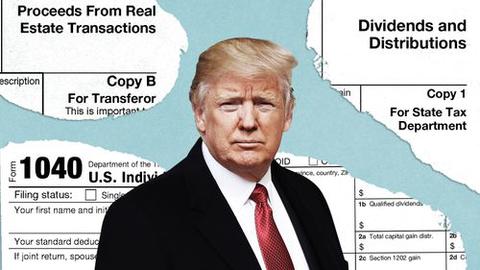
Lawsuits involving Donald Trump tore apart the Supreme Court while he was president, and the justices apparently remain riven by him.
For nearly four months, the court has refused to act on emergency filings related to a Manhattan grand jury’s subpoena of Trump tax returns, effectively thwarting part of the investigation.
The Supreme Court’s inaction marks an extraordinary departure from its usual practice of timely responses when the justices are asked to block a lower court decision on an emergency basis and has spurred questions about what is happening behind the scenes.
Chief Justice John Roberts, based on his past pattern, may be trying to appease dueling factions among the nine justices, to avoid an order that reinforces a look of partisan politics. Yet paradoxically, the unexplained delay smacks of politics and appears to ensnarl the justices even more in the controversies of Trump.
The Manhattan investigation, led by District Attorney Cyrus Vance, continues to draw extensive public attention. The grand jury is seeking Trump personal and business records back to 2011. Part of the probe involves hush-money payments Trump lawyer Michael Cohen made to cover up alleged affairs. (Trump has denied those allegations.) » Read the rest of this entry «
February 18th, 2021 § Comments Off on Coming Soon: The ‘Vaccine Passport’ § permalink
By Tariro Mzezewa
In the near future, travel may require digital documentation showing that passengers have been vaccinated or tested for the coronavirus
Among governments and those in the travel industry, a new term has entered the vocabulary: vaccine passport.
One of President Biden’s executive orders aimed at curbing the pandemic asks government agencies to “assess the feasibility” of linking coronavirus vaccine certificates with other vaccination documents, and producing digital versions of them.
Denmark’s government said on Wednesday that in the next three to four months, it will roll out a digital passport that will allow citizens to show they have been vaccinated.
It isn’t just governments that are suggesting vaccine passports. In a few weeks, Etihad Airways and Emirates will start using a digital travel pass, developed by the International Air Transport Association, to help passengers manage their travel plans and provide airlines and governments documentation that they have been vaccinated or tested for Covid-19. » Read the rest of this entry «
February 8th, 2021 § Comments Off on The Struggle Over Chips Enters A New Phase § permalink
from Economist.com
The age of chip manufacture in China could be beginning
WHEN MICROCHIPS were invented in 1958, the first significant market for them was inside nuclear missiles. Today about a trillion chips are made a year, or 128 for every person on the planet. Ever more devices and machines contain ever more semiconductors: an electric car can have over 3,000 of them. New types of computation are booming, including artificial intelligence and data-crunching. Demand will soar further as more industrial machines are connected and fitted with sensors.
For decades a vast network of chip firms has co-operated and competed to meet this growing demand; today they crank out $450bn of annual sales. No other industry has the same mix of hard science, brutal capital intensity and complexity. Its broader impact is huge, too. When the supply chain misfires, economic activity can grind to a halt. This month a temporary shortage of chips has stopped car production-lines around the world.
And no other industry is as explosive. For several years America has enforced an intensifying embargo on China, which imports over $300bn-worth of chips a year because it lacks the manufacturing capability to meet its own needs. Fresh strains in the chip industry are forcing the geopolitical fault-lines further apart. America is falling behind in manufacturing, production is being concentrated in East Asia, and China is seeking self-sufficiency (see article). In the 20th century the world’s biggest economic choke-point involved oil being shipped through the Strait of Hormuz. Soon it will be silicon etched in a few technology parks in South Korea and Taiwan. » Read the rest of this entry «
January 25th, 2021 § Comments Off on Trump Made 30,573 False Or Misleading Claims As President. Nearly Half Came In His Final Year § permalink
By Glenn Kessler
As a result of Trump’s constant lying through the presidential megaphone, more Americans are skeptical of genuine facts than ever before
And so it went, day after day, week after week, claim after claim, from the most mundane of topics to the most pressing issues.
Over time, Trump unleashed his falsehoods with increasing frequency and ferocity, often by the scores in a single campaign speech or tweetstorm. What began as a relative trickle of misrepresentations, including 10 on his first day and five on the second, built into a torrent through Trump’s final days as he frenetically spread wild theories that the coronavirus pandemic would disappear “like a miracle” and that the presidential election had been stolen — the claim that inspired Trump supporters to attack Congress on Jan. 6 and prompted his second impeachment.
The final tally of Trump’s presidency: 30,573 false or misleading claims — with nearly half coming in his final year.
For more than 10 years, The Fact Checker has assessed the accuracy of claims made by politicians in both parties, and that practice will continue. But Trump, with his unusually flagrant disregard for facts, posed a new challenge, as so many of his claims did not merit full-fledged fact checks. What started as a weekly feature — “What Trump got wrong on Twitter this week” — turned into a project for Trump’s first 100 days. Then, in response to reader requests, the Trump database was maintained for four years, despite the increasing burden of keeping it up. » Read the rest of this entry «
